

EDGE AI • HEAT RECOVERY • WATER EFFICIENCY • DISTRIBUTED RESILIENCE • MICRO DATA CENTERS • COMMUNITY INFRASTRUCTURE • DARK-FIBRE SCALE-ACROSS • NVIDIA SPECTRUM-XGS • CHALLENGING MEGA DATA CENTRESEDGE AI • HEAT RECOVERY • WATER EFFICIENCY • DISTRIBUTED RESILIENCE • MICRO DATA CENTERS • COMMUNITY INFRASTRUCTURE • DARK-FIBRE SCALE-ACROSS • NVIDIA SPECTRUM-XGS • CHALLENGING MEGA DATA CENTRES
Asset conversion

Turn existing businesses into distributed infrastructure.

The concept retrofits laundries, car washes and other compatible commercial assets so that computing, heat recovery, water treatment and local revenue streams reinforce each other.

Existing-site leverage

Reuse existing structures, parking, water connections, zoning advantages and customer-facing real estate where appropriate.

Thermal usefulness

Server heat is routed into hot-water and drying loops before any remaining energy is rejected by a cooler.

Operational resilience

A distributed network can continue serving workloads even when individual sites are offline or under maintenance.

Local business case

Compute revenue, service revenue, lease income and utility savings can stack together rather than relying on one stream.

Water efficiency

Greywater filtration, recirculation and careful load management reduce freshwater demand in vehicle-wash and cooling systems.

Rural & urban fit

The model is flexible enough for suburban laundries, vehicle-wash facilities and community-scale nodes tied to other projects.

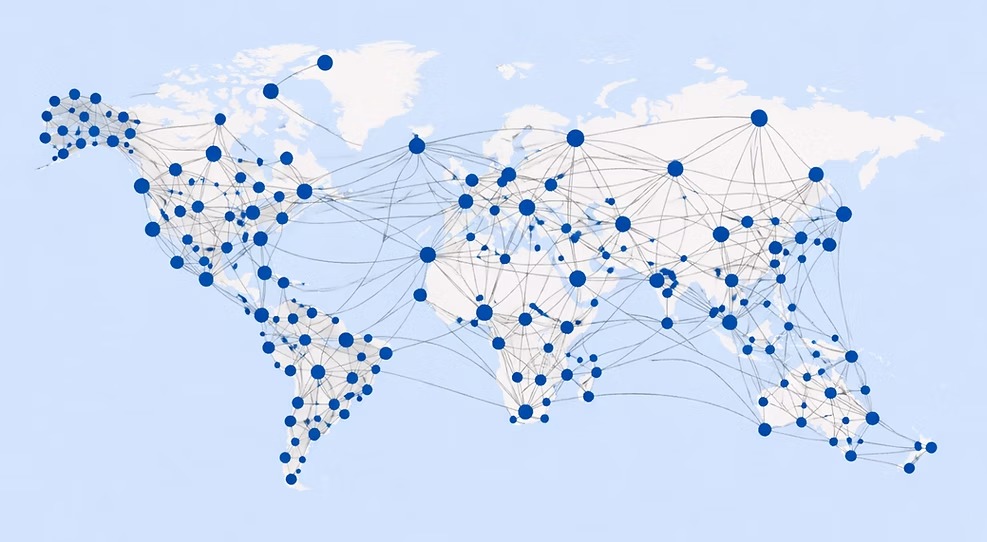
Distributed edge network illustration

Compute closer to demand.

The network is designed around ultra-low latency, high availability, practical site reuse and distributed resilience, with financial performance modeled across multiple deployment scenarios. Dedicated dark fibre and NVIDIA Spectrum-XGS scale-across networking provide the experimental path for testing whether distributed sites can perform as one system — and whether the mega data centre is therefore an architectural choice rather than a necessity.

See parent-company economics
Retrofit targets

Built around businesses that already need water and heat.

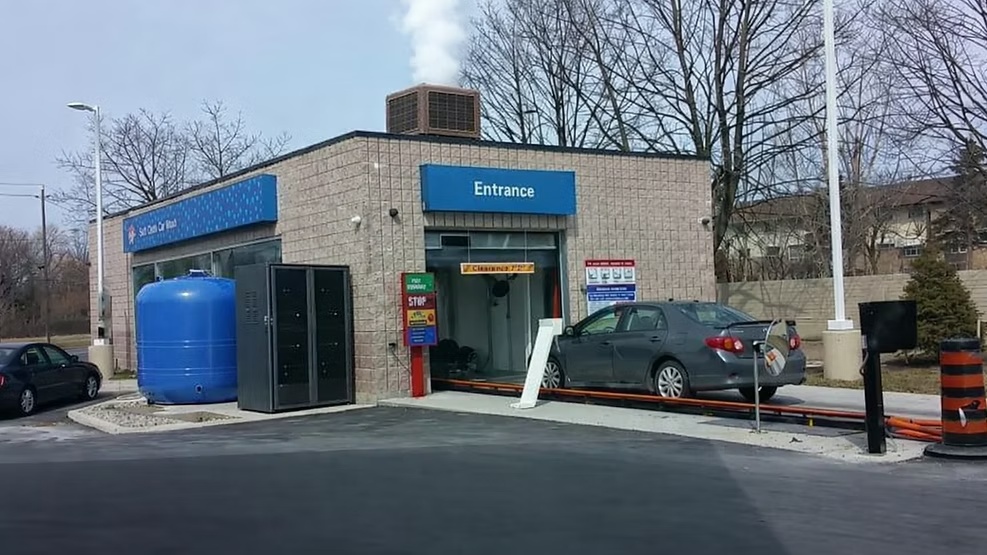
Existing Shell car wash retrofit concept
Existing vehicle-wash infrastructure can host compact liquid-cooled compute and thermal storage.
Existing Esso car wash retrofit concept
Small-footprint edge hardware can be added without constructing a hyperscale campus.
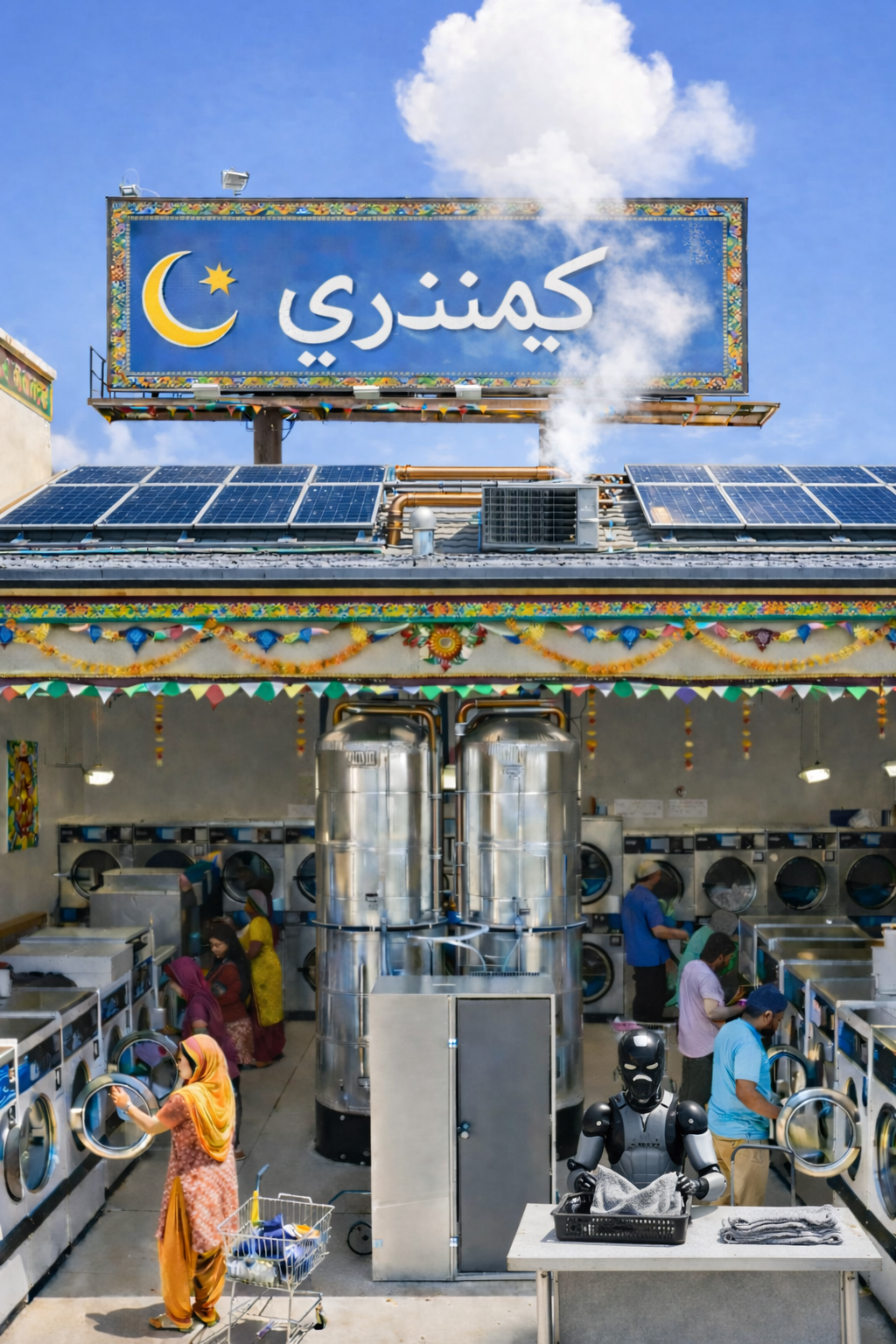
Laundry retrofit concept with solar and heat reuse
Laundries provide recurring hot-water and drying demand — exactly the kind of thermal sink the model needs.
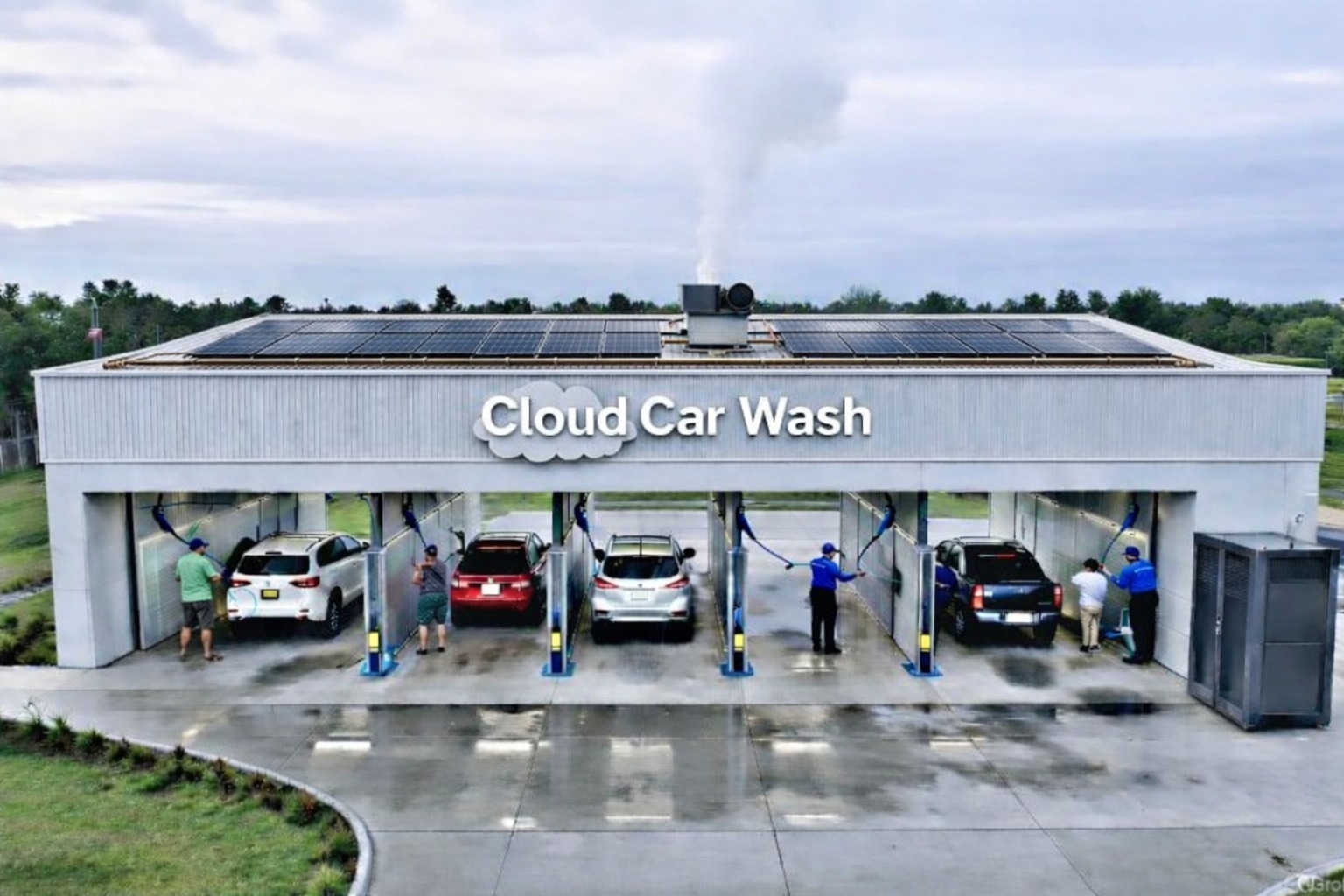
Cloud Car Wash concept with solar and micro data center
The Cloud Car Wash concept combines service revenue, solar generation, liquid cooling and useful heat reuse.
Open science downloads

Current papers, methods and model limits.

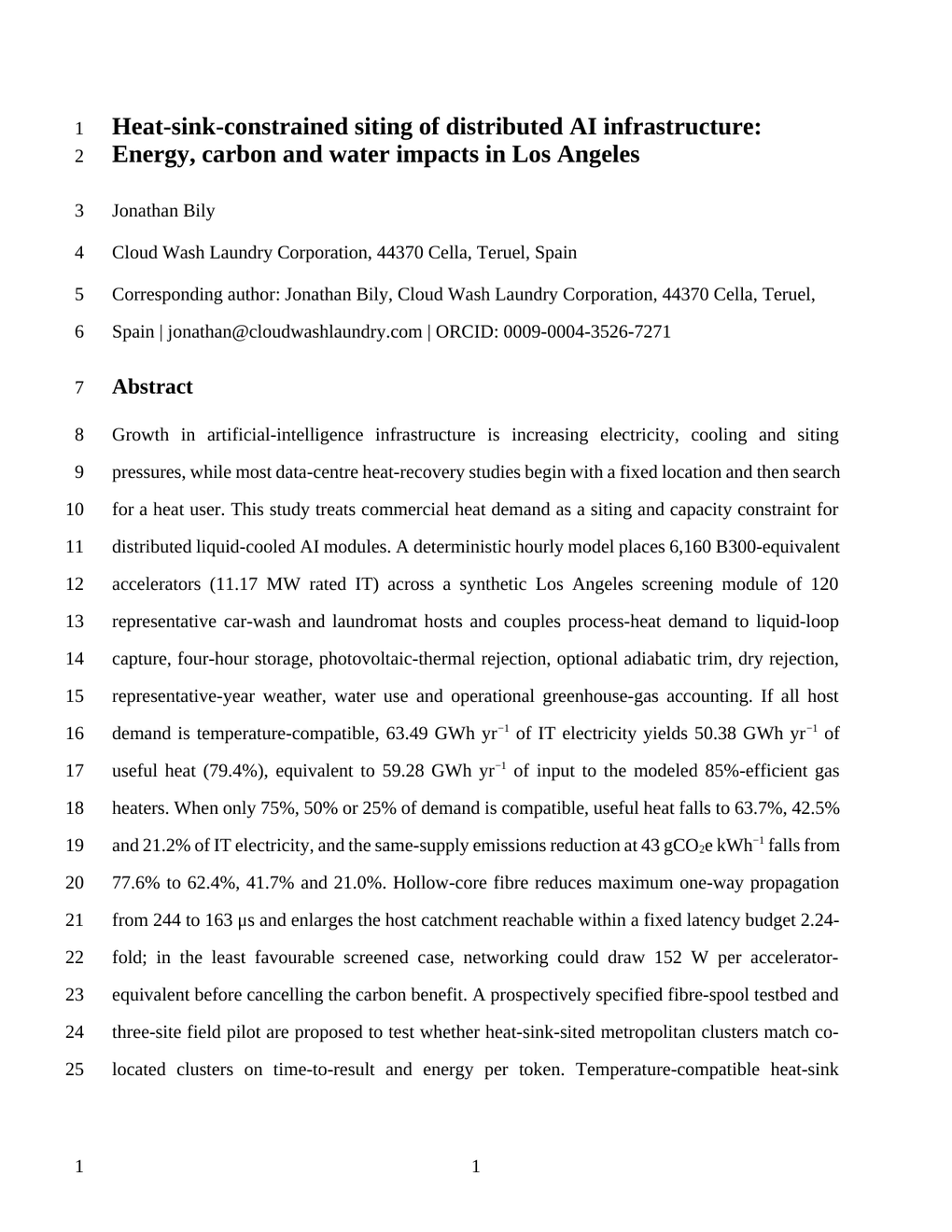
First page of the current heat-sink-constrained distributed AI infrastructure manuscript

Heat-sink-constrained siting of distributed AI infrastructure: energy, carbon and water impacts in Los Angeles

The current deterministic hourly study places 6,160 B300-equivalent accelerators across 120 representative car-wash and laundromat hosts and tests useful heat, carbon, water, climate and metropolitan-network constraints. Its network programme uses NVIDIA Spectrum-XGS as the scale-across layer over dedicated optical fibre and specifies fibre-spool and multi-site experiments to test whether distributed sites can match co-located clusters — the key experiment behind the project’s objective of proving that mega data centres can become obsolete as the default architecture for many workloads.
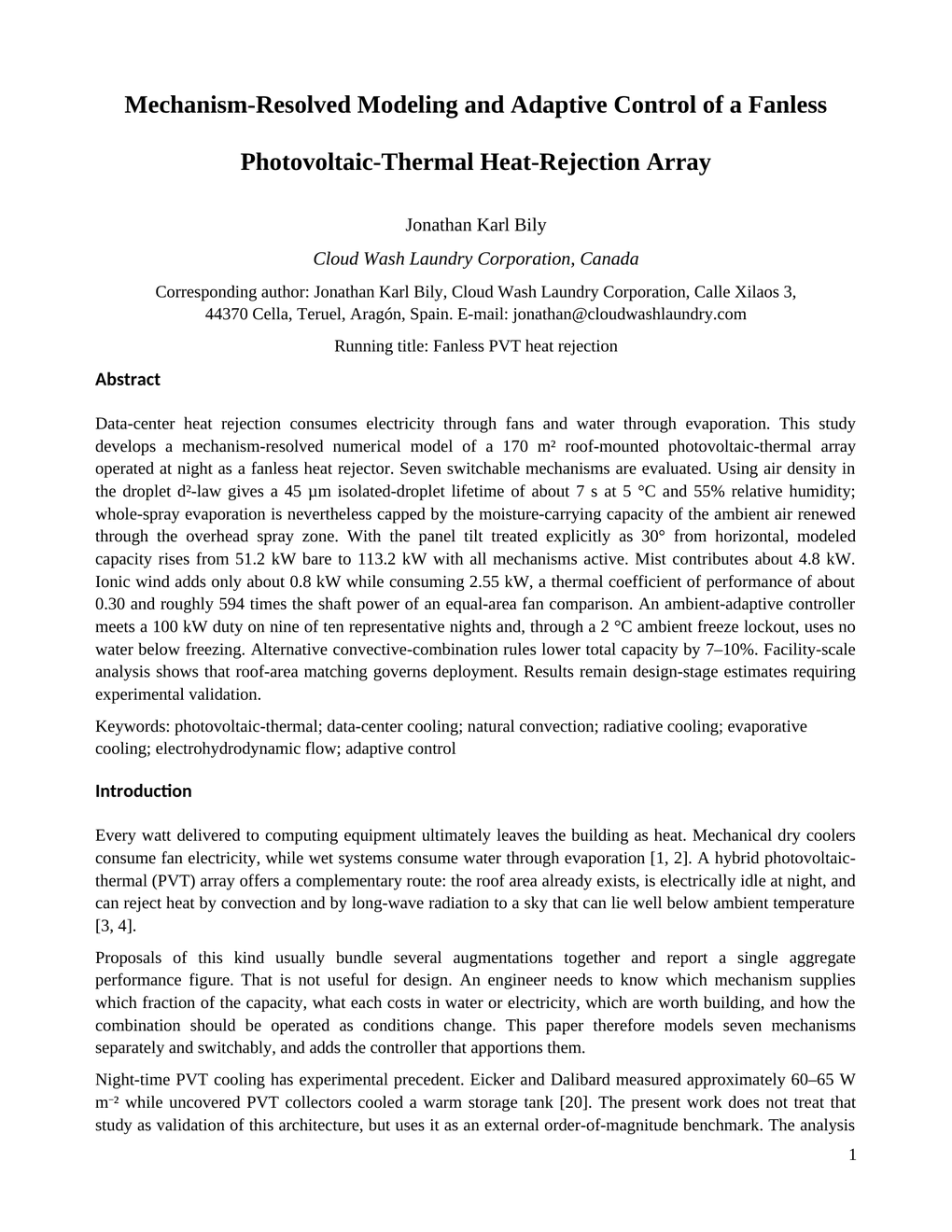
First page of the current mechanism-resolved fanless photovoltaic-thermal heat-rejection manuscript

Mechanism-resolved modeling and adaptive control of a fanless photovoltaic-thermal heat-rejection array

The current 170 m² roof-array study resolves passive and wetted mechanisms separately, quantifies the water-capacity trade-off, rejects array-wide ionic wind on energetic grounds and tests roof-area matching from micro facilities to hyperscale.

Central architecture challenge

The goal: prove the mega data centre is no longer necessary.

Cloud Wash Laundry is being designed around a direct technical challenge to the conventional mega-campus model: place compute where useful heat already exists, then connect those heat-sink-sited AI factories with dedicated dark fibre and NVIDIA Spectrum-XGS scale-across networking so the distributed sites can operate as one metropolitan compute fabric.

The dark fibre is the dedicated optical transport; Spectrum-XGS is NVIDIA’s scale-across networking layer. The project’s proposed fibre-spool testbed and multi-site field pilot are intended to determine whether distributed sites can match co-located clusters on workload-level measures such as time-to-result and energy per token.

Latest physical-model findings

Measured next. Modeled now. Heat-sink constrained.

Current design-stage results combine the 120-host Los Angeles heat-sink-siting model with the updated fanless heat-rejection screening figure. They are screening outputs, not field-certified performance. In parallel, the network programme tests whether NVIDIA Spectrum-XGS scale-across networking over dedicated dark fibre can make geographically separated AI factories behave as one compute system. The mega-data-centre conclusion remains an experimental objective, not an already validated result.

79.4%IT electricity converted to useful process heat in the optimistic fully temperature-compatible heat-sink bound
77.6%same-supply operational emissions reduction at 43 gCO₂e/kWh in that upper-bound compatibility case
74 m³/yrcentral direct evaporative water in the current Los Angeles screening model
44.2%reduction in wetted states under dispatch in the current fanless heat-rejection screening figure
120 / 67 stateswater-eligible states versus wetted states under dispatch in the current screening summary
3-site dark-fibre pilotplanned workload-level validation of the NVIDIA Spectrum-XGS scale-across architecture against a co-located reference

The 79.4% and 77.6% values use the optimistic fT = 1.00 temperature-compatibility bound; lower compatible heat fractions materially reduce both benefits. The updated fanless heat-rejection figure also summarizes 83 of 144 states as feasible overall and 77 of 144 as feasible by free pathways alone, while array-wide EHD is not preferred because only 3 of 80 tested cases exceed the conservative comparator.