
EDGE AI • HEAT RECOVERY • WATER EFFICIENCY • DISTRIBUTED RESILIENCE • MICRO DATA CENTERS • COMMUNITY INFRASTRUCTURE • DARK-FIBRE SCALE-ACROSS • NVIDIA SPECTRUM-XGS • CHALLENGING MEGA DATA CENTRESEDGE AI • HEAT RECOVERY • WATER EFFICIENCY • DISTRIBUTED RESILIENCE • MICRO DATA CENTERS • COMMUNITY INFRASTRUCTURE • DARK-FIBRE SCALE-ACROSS • NVIDIA SPECTRUM-XGS • CHALLENGING MEGA DATA CENTRES
Franchisee economics

Franchisee model: site-level cash flow, payback and stress-tested unit economics.

The franchisee plan is where the site-level economics become concrete: incremental capital, net AI revenue after royalty, utility costs, payback, scenario analysis and downside resilience.

$3.4MApproximate total capital investment per site in the main franchisee plan.
35 GPUsReference midpoint deployment used in several site-level calculations.
$1.09MApproximate Year-1 cumulative incremental pre-tax income in the payback example.
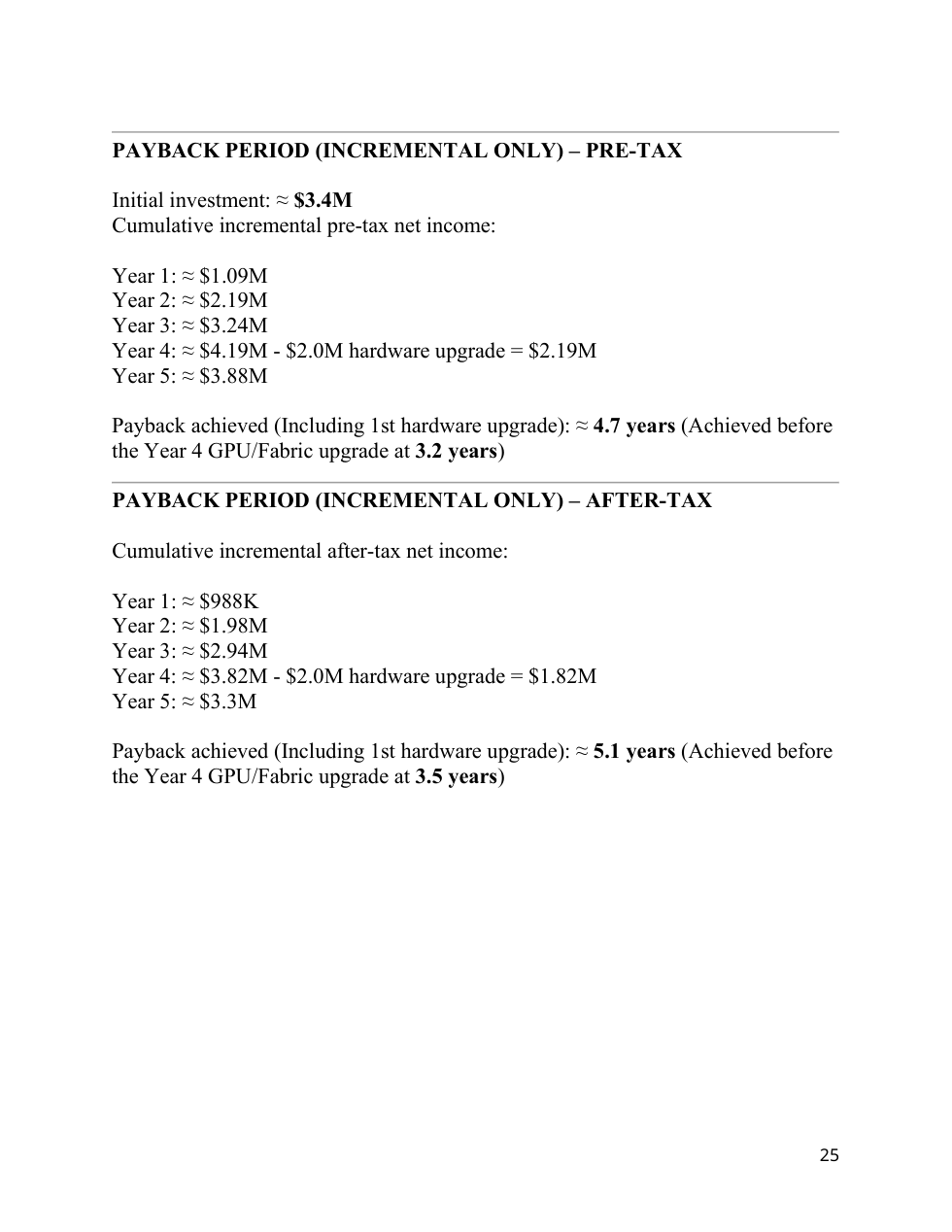
~4.5 yearsApproximate payback with first major hardware refresh included.
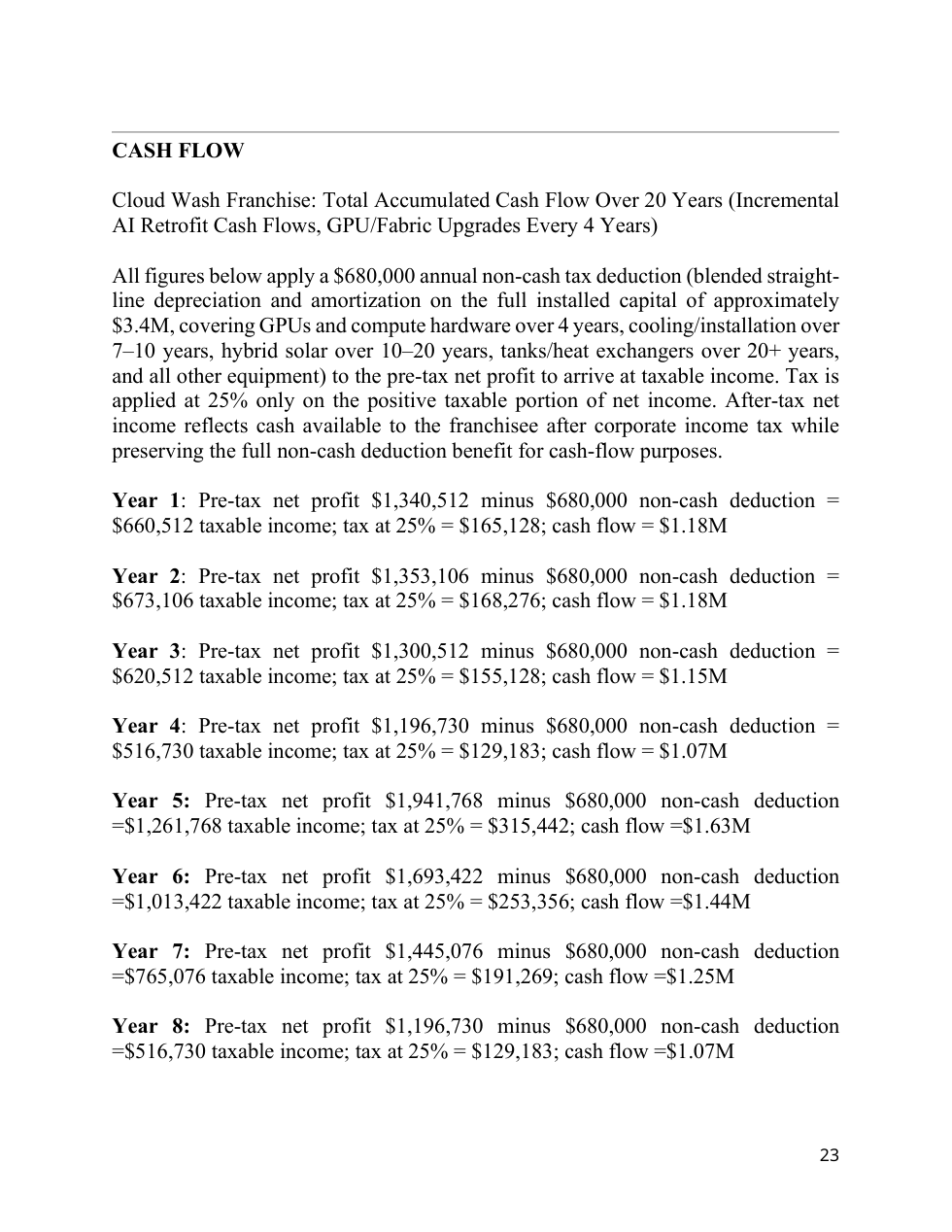
Franchisee cash flow page
Cash flowLong-range accumulated franchisee cash flow.
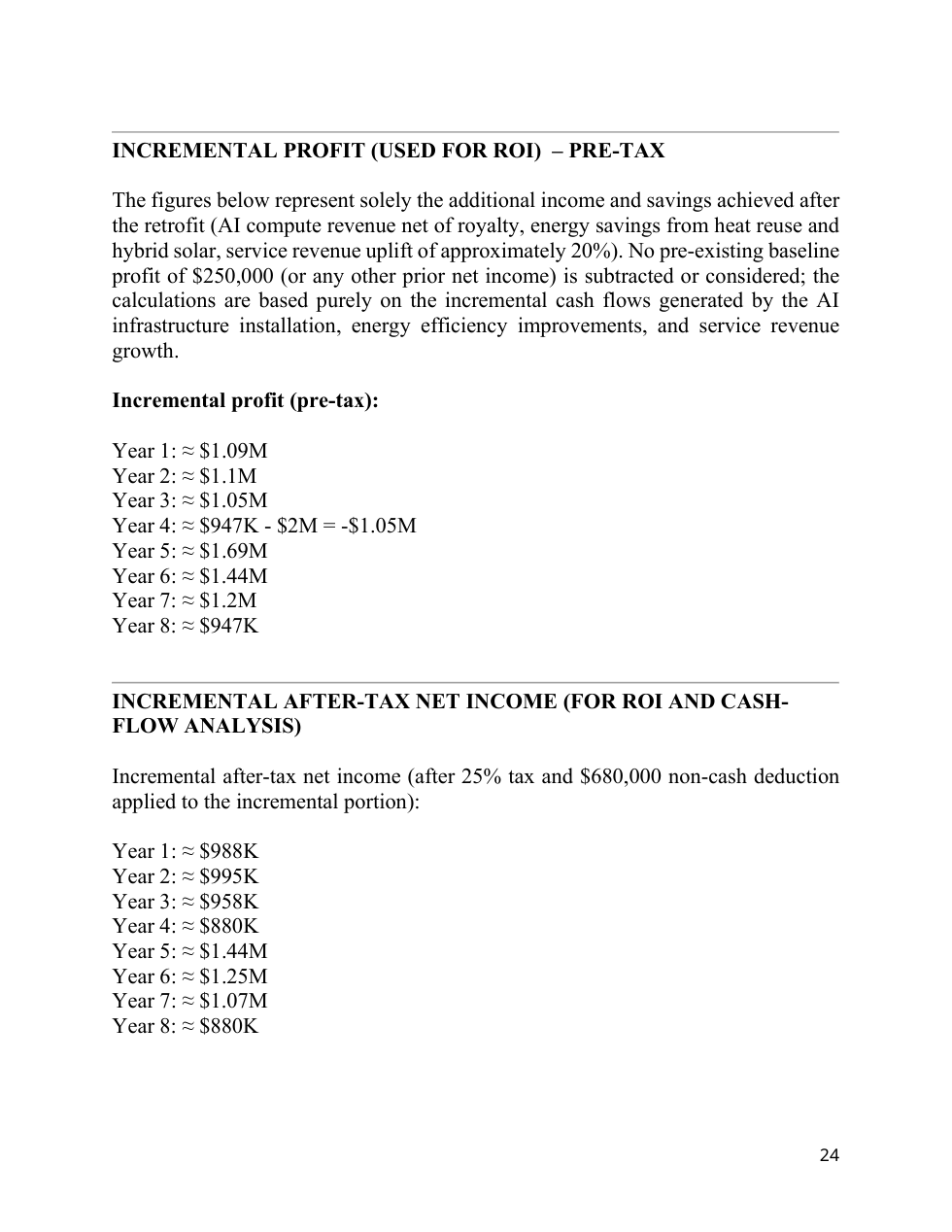
Franchisee incremental profit page
Incremental profitSite-level incremental profit and ROI scenario.
Franchisee payback period page
Payback periodPayback on incremental capital.
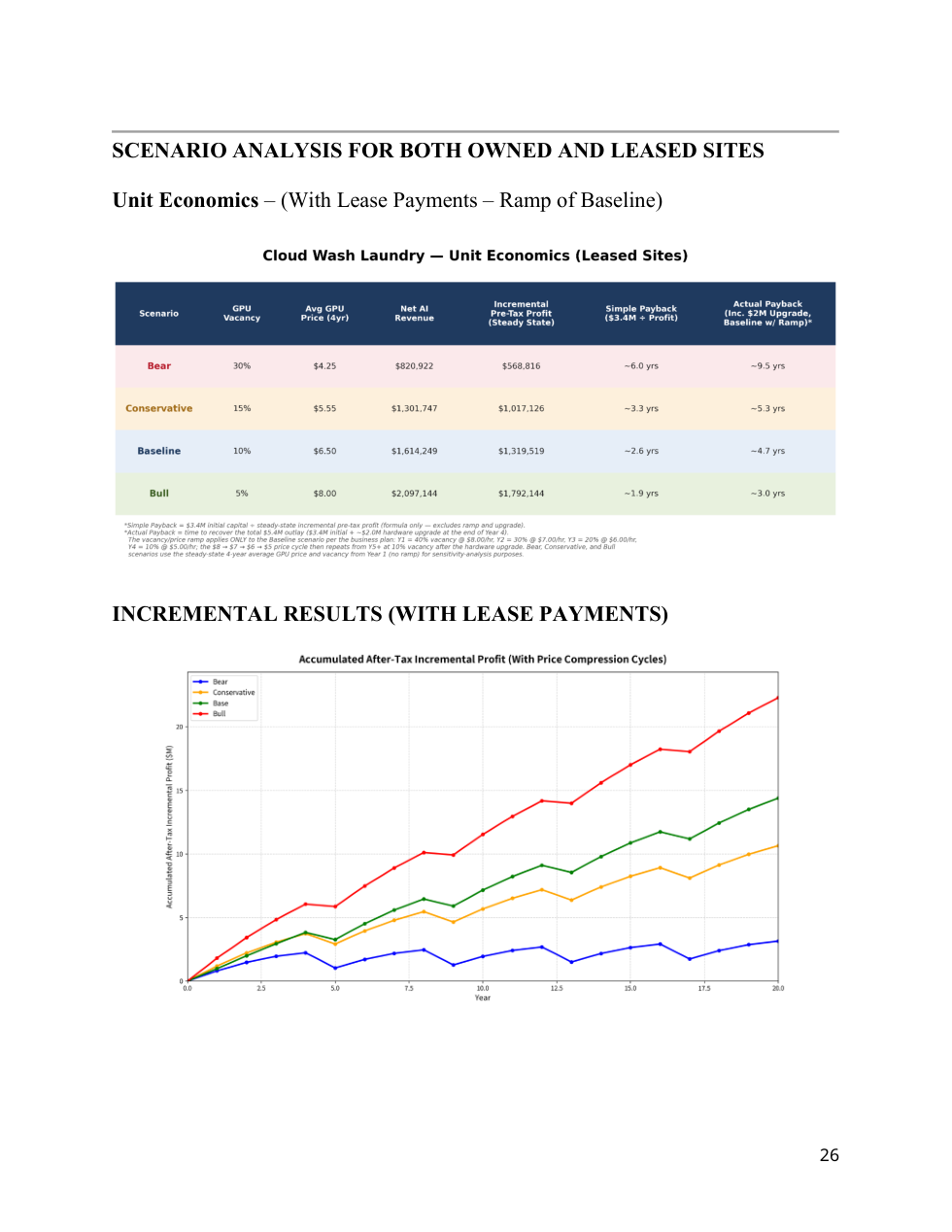
Leased-site scenario analysis page
Scenario analysis — leased siteLeased-site economics comparison.
Owned-site scenario analysis page
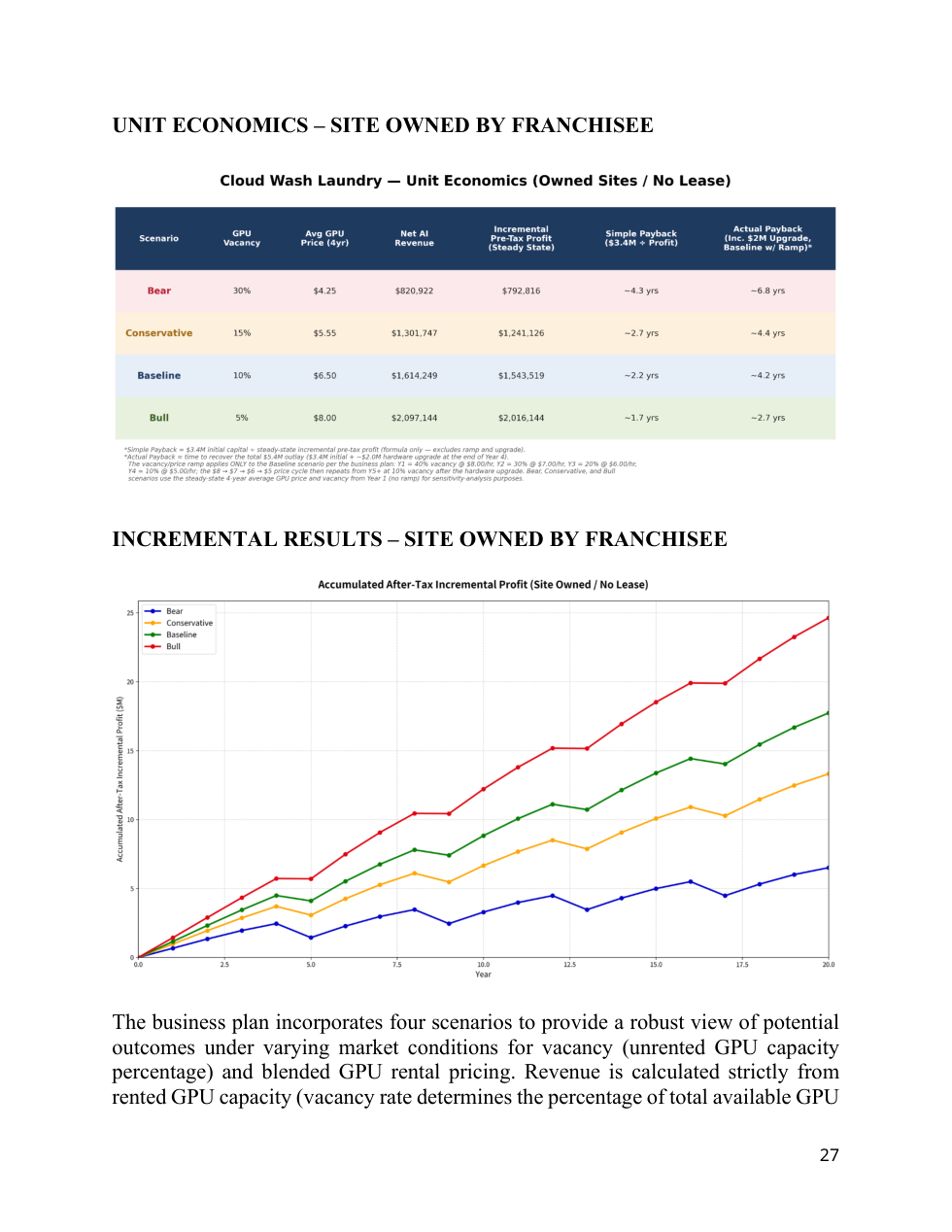
Scenario analysis — owned siteOwned-site economics comparison.
Franchisee site-value page
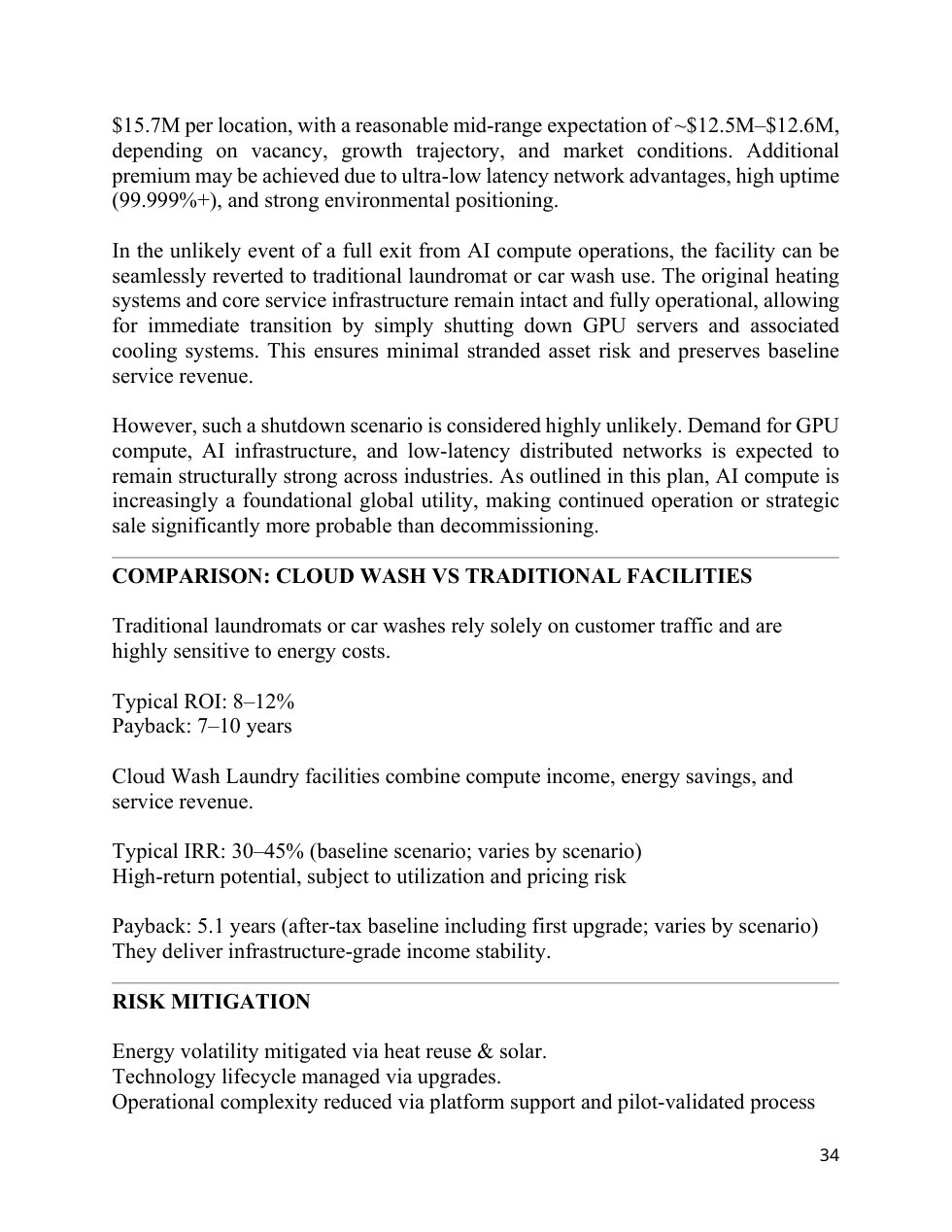
Site value estimatePotential mature-location value range.
Franchisee stress-test conclusion
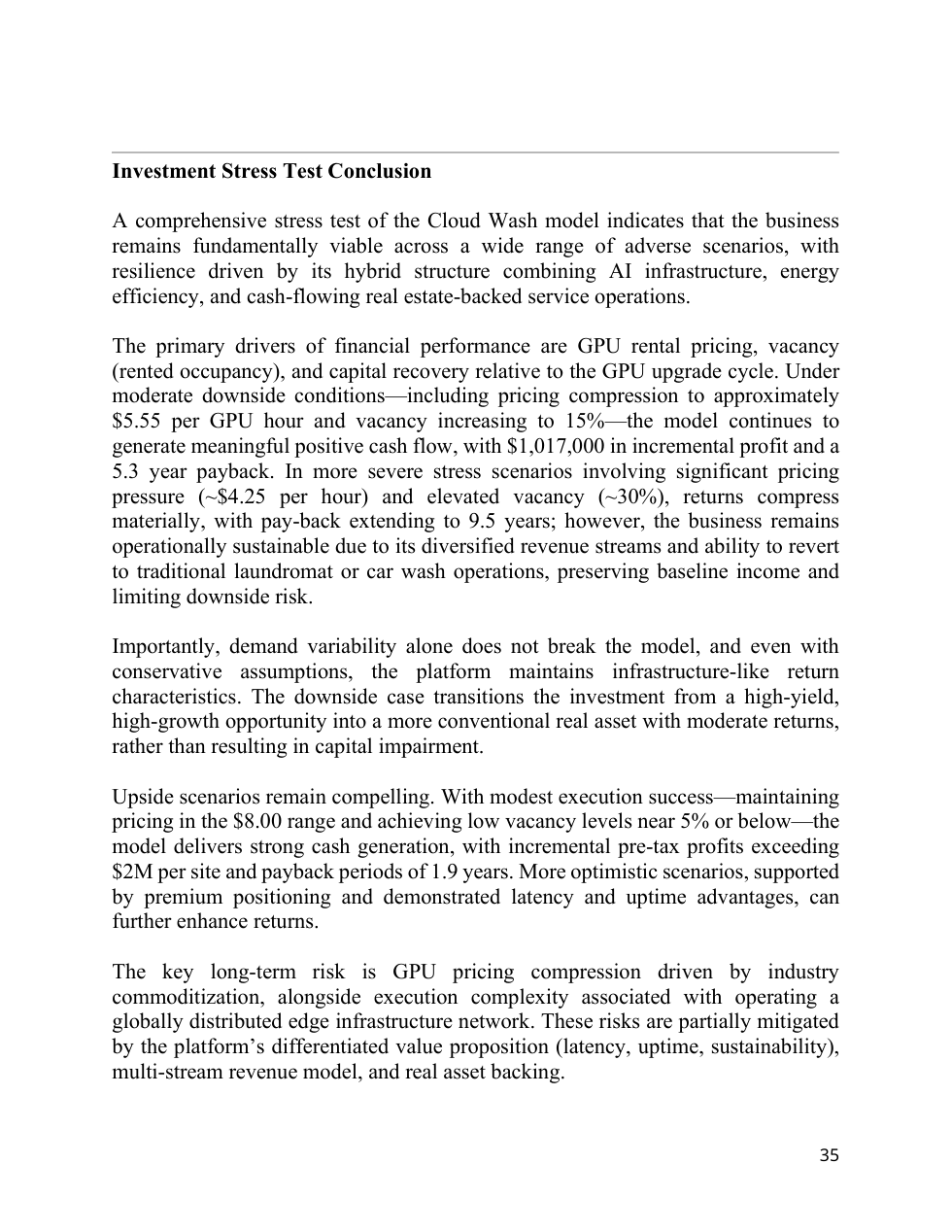
Stress-test conclusionDownside-resilience stress test.
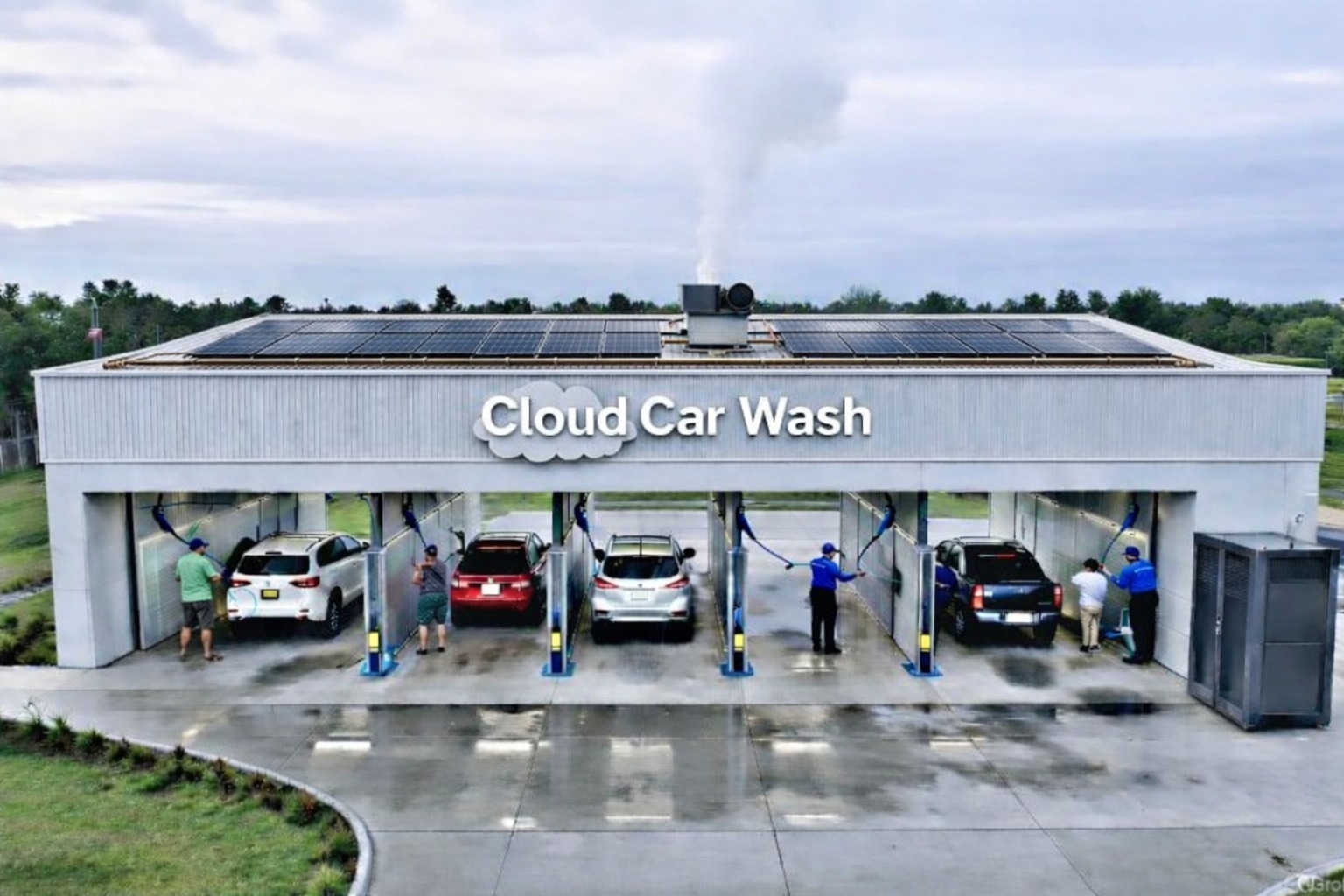
Cloud Car Wash retrofit concept
Physical-site concept

Compute becomes another utility stream inside an operating business.

The physical model is built around real recurring thermal loads rather than hypothetical district-heat demand. Car washes and laundries can absorb useful heat, while the distributed network supplies compute revenue and flexible workload placement. At network scale, dedicated dark fibre and NVIDIA Spectrum-XGS are intended to make those independently operated sites function as a unified compute fabric rather than isolated edge nodes.

Open science downloads

Current papers, methods and model limits.

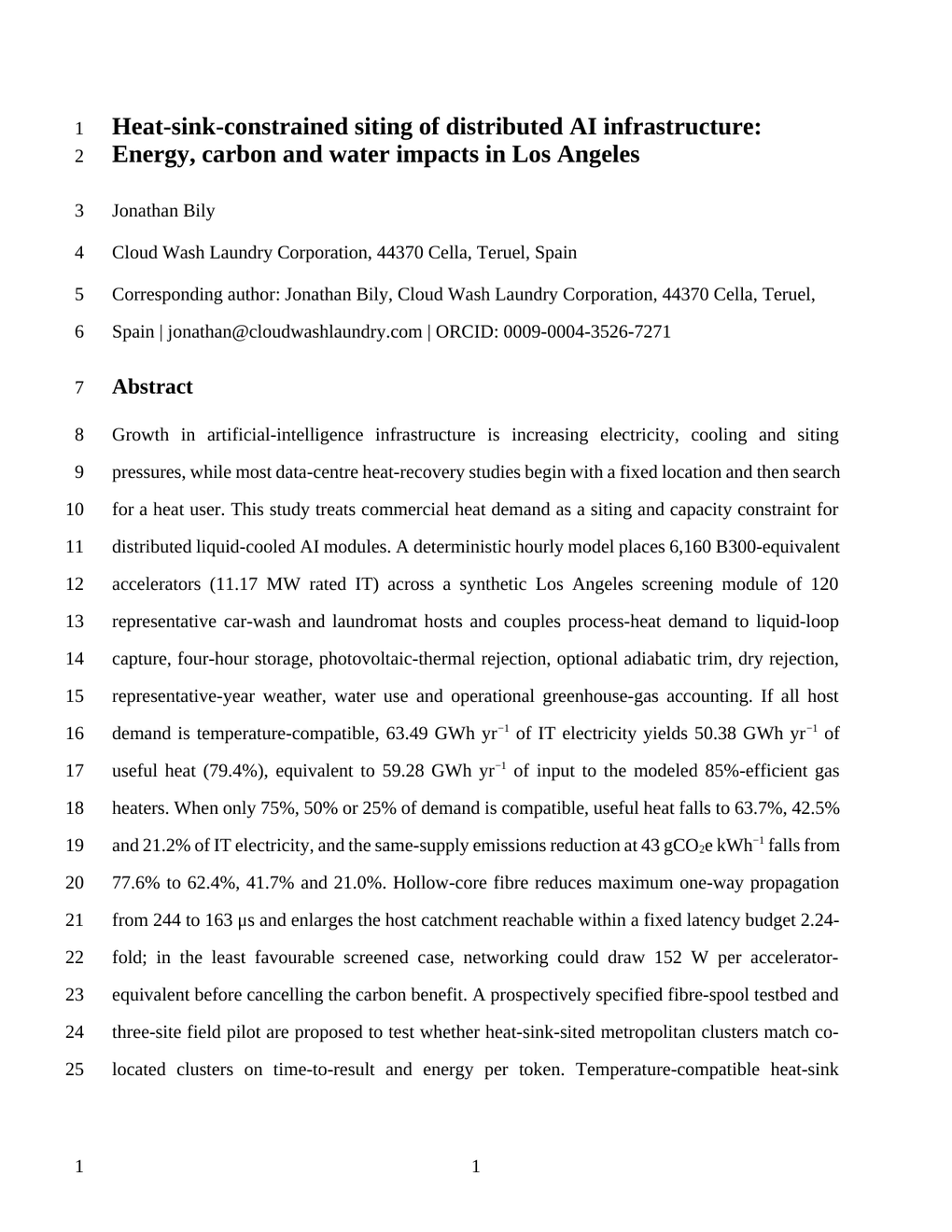
First page of the current heat-sink-constrained distributed AI infrastructure manuscript

Heat-sink-constrained siting of distributed AI infrastructure: energy, carbon and water impacts in Los Angeles

The current deterministic hourly study places 6,160 B300-equivalent accelerators across 120 representative car-wash and laundromat hosts and tests useful heat, carbon, water, climate and metropolitan-network constraints. Its network programme uses NVIDIA Spectrum-XGS as the scale-across layer over dedicated optical fibre and specifies fibre-spool and multi-site experiments to test whether distributed sites can match co-located clusters — the key experiment behind the project’s objective of proving that mega data centres can become obsolete as the default architecture for many workloads.
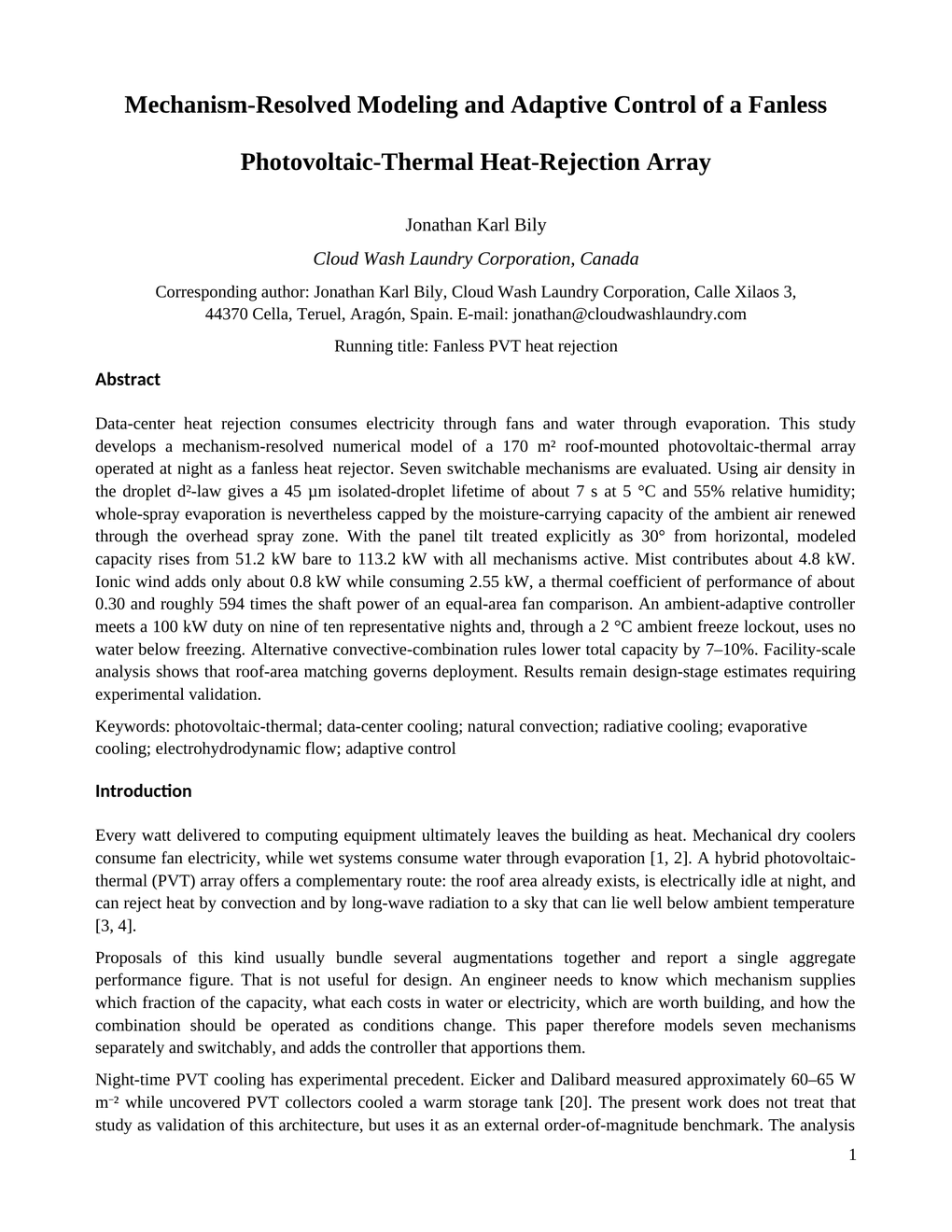
First page of the current mechanism-resolved fanless photovoltaic-thermal heat-rejection manuscript

Mechanism-resolved modeling and adaptive control of a fanless photovoltaic-thermal heat-rejection array

The current 170 m² roof-array study resolves passive and wetted mechanisms separately, quantifies the water-capacity trade-off, rejects array-wide ionic wind on energetic grounds and tests roof-area matching from micro facilities to hyperscale.

Central architecture challenge

The goal: prove the mega data centre is no longer necessary.

Cloud Wash Laundry is being designed around a direct technical challenge to the conventional mega-campus model: place compute where useful heat already exists, then connect those heat-sink-sited AI factories with dedicated dark fibre and NVIDIA Spectrum-XGS scale-across networking so the distributed sites can operate as one metropolitan compute fabric.

The dark fibre is the dedicated optical transport; Spectrum-XGS is NVIDIA’s scale-across networking layer. The project’s proposed fibre-spool testbed and multi-site field pilot are intended to determine whether distributed sites can match co-located clusters on workload-level measures such as time-to-result and energy per token.

Latest physical-model findings

Measured next. Modeled now. Heat-sink constrained.

Current design-stage results combine the 120-host Los Angeles heat-sink-siting model with the updated fanless heat-rejection screening figure. They are screening outputs, not field-certified performance. In parallel, the network programme tests whether NVIDIA Spectrum-XGS scale-across networking over dedicated dark fibre can make geographically separated AI factories behave as one compute system. The mega-data-centre conclusion remains an experimental objective, not an already validated result.

79.4%IT electricity converted to useful process heat in the optimistic fully temperature-compatible heat-sink bound
77.6%same-supply operational emissions reduction at 43 gCO₂e/kWh in that upper-bound compatibility case
74 m³/yrcentral direct evaporative water in the current Los Angeles screening model
44.2%reduction in wetted states under dispatch in the current fanless heat-rejection screening figure
120 / 67 stateswater-eligible states versus wetted states under dispatch in the current screening summary
3-site dark-fibre pilotplanned workload-level validation of the NVIDIA Spectrum-XGS scale-across architecture against a co-located reference

The 79.4% and 77.6% values use the optimistic fT = 1.00 temperature-compatibility bound; lower compatible heat fractions materially reduce both benefits. The updated fanless heat-rejection figure also summarizes 83 of 144 states as feasible overall and 77 of 144 as feasible by free pathways alone, while array-wide EHD is not preferred because only 3 of 80 tested cases exceed the conservative comparator.