Why conventional data centres face resistance
The public sees the water, power, land and waste-heat problem.
Large centralized data centres can concentrate electricity demand, cooling-water demand, land use and rejected heat in one place. Cloud Wash is designed around the opposite proposition: distribute compute into compatible existing businesses, recover useful heat first, and use water only where it materially improves rejection.
Water
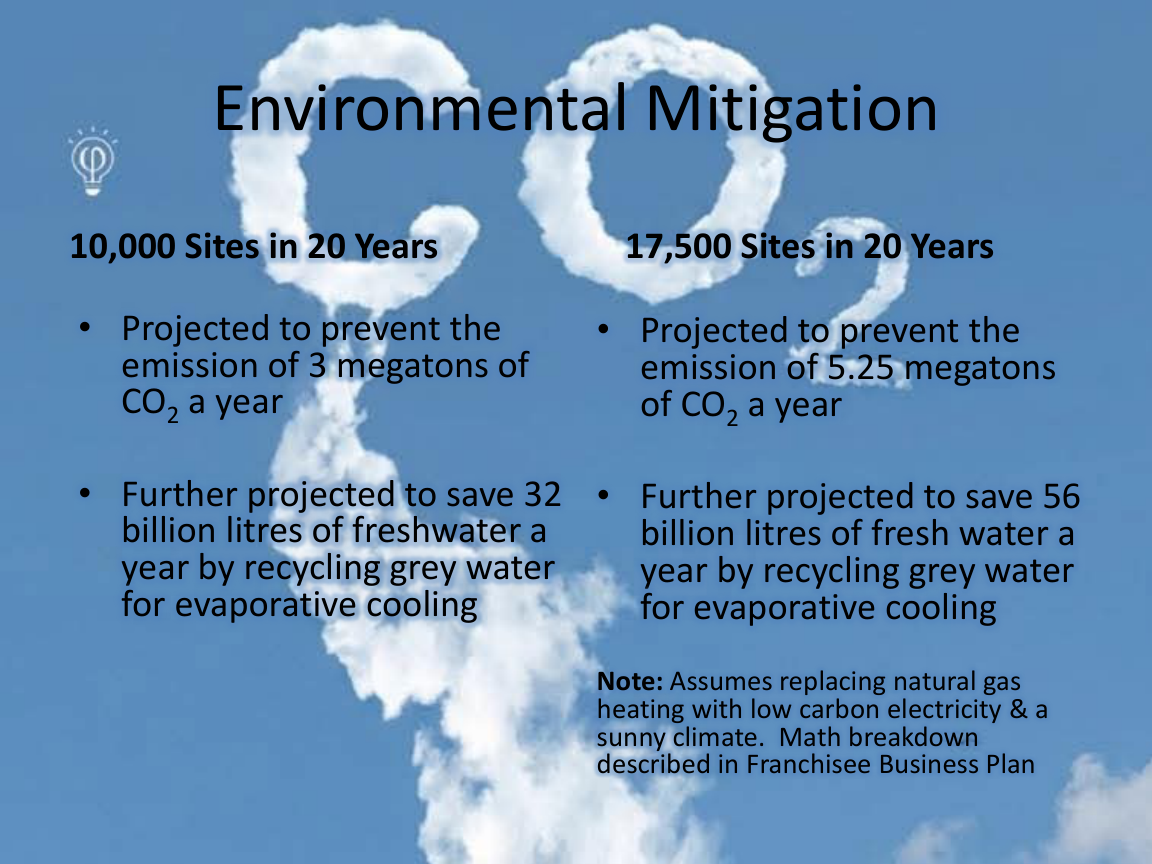
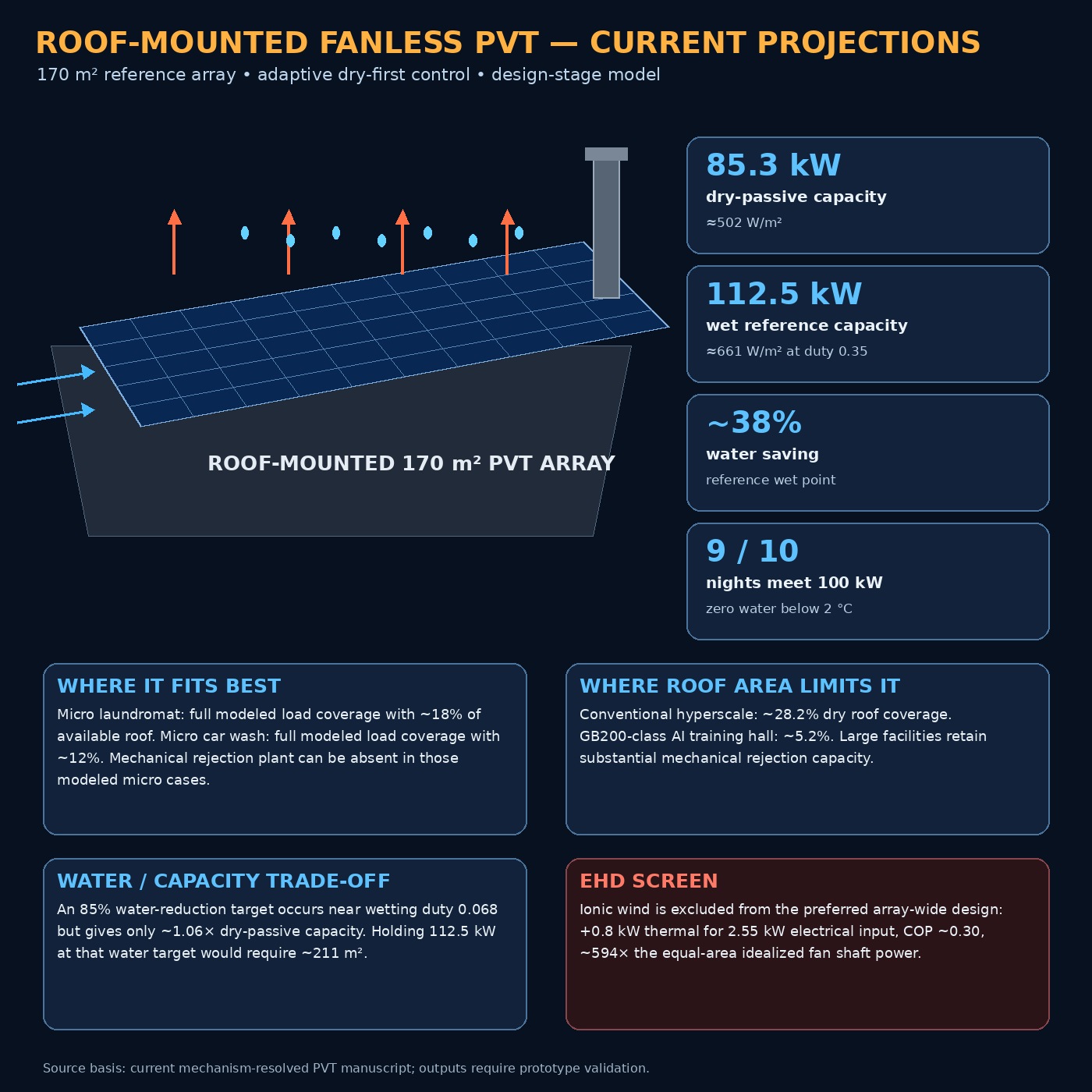
The current Los Angeles screening model uses 74 m³/year of direct evaporative water in its central case. A dry-only captured-loop sensitivity uses zero direct cooling water, while a 0.6× rated-IT hybrid cooler rejects all captured heat with at most 217 m³/year of recycled host water in the screened cases.
Useful heat instead of waste heat
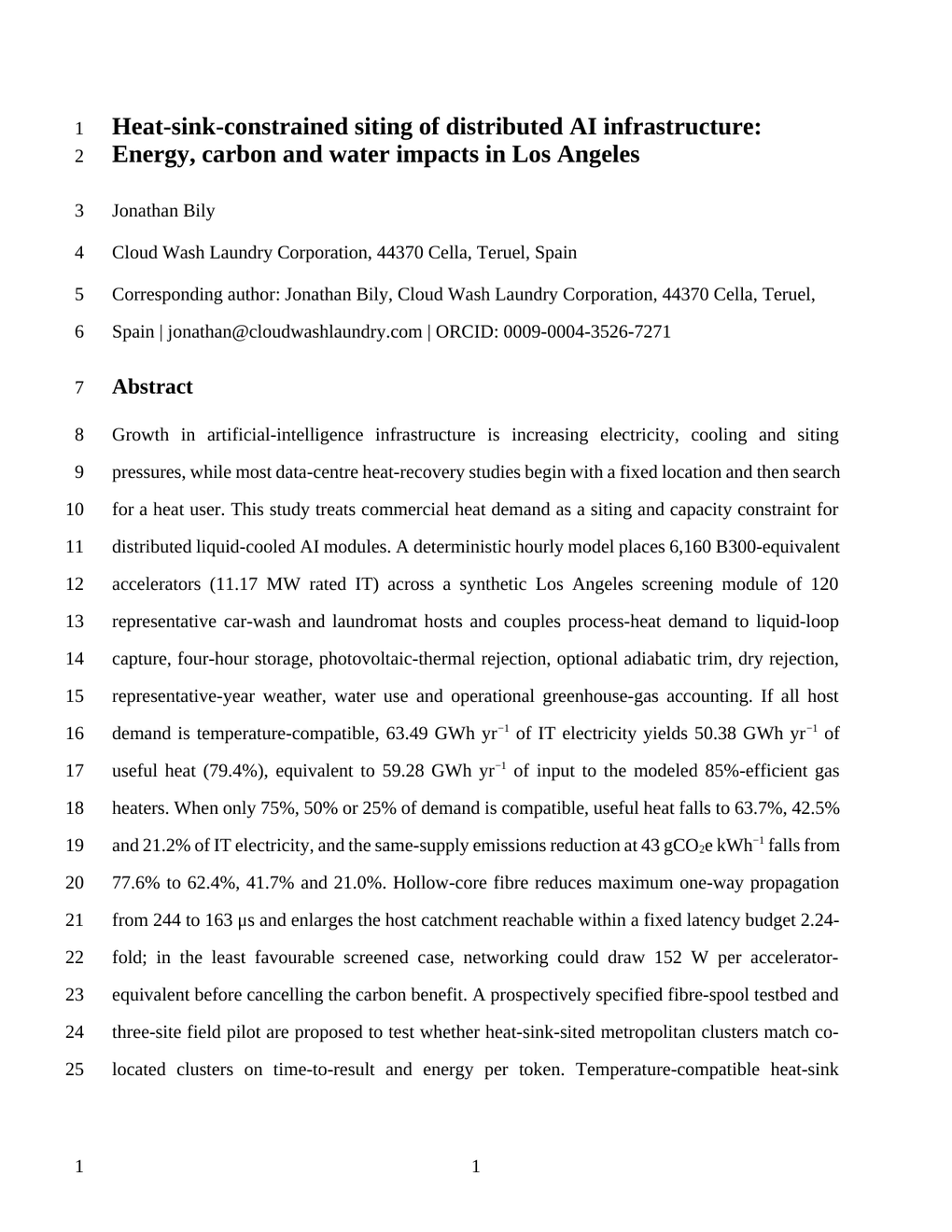
Under the optimistic fully temperature-compatible bound, 50.38 GWh/year becomes useful process heat: 79.4% of IT electricity and 93.4% of modeled host thermal demand. Lower temperature compatibility materially reduces that benefit.
Existing sites, not giant greenfield campuses
Car washes and laundromats already have recurring thermal demand. The current model treats that demand as the siting and capacity constraint rather than assuming arbitrary compute density can be accommodated. The network layer then uses dedicated dark fibre and NVIDIA Spectrum-XGS scale-across networking to test whether environmental benefits can be gained without sacrificing the workload-level function normally used to justify a mega data centre.